


Single- or Double-Circuit Air Suspension Systems Which one is better?
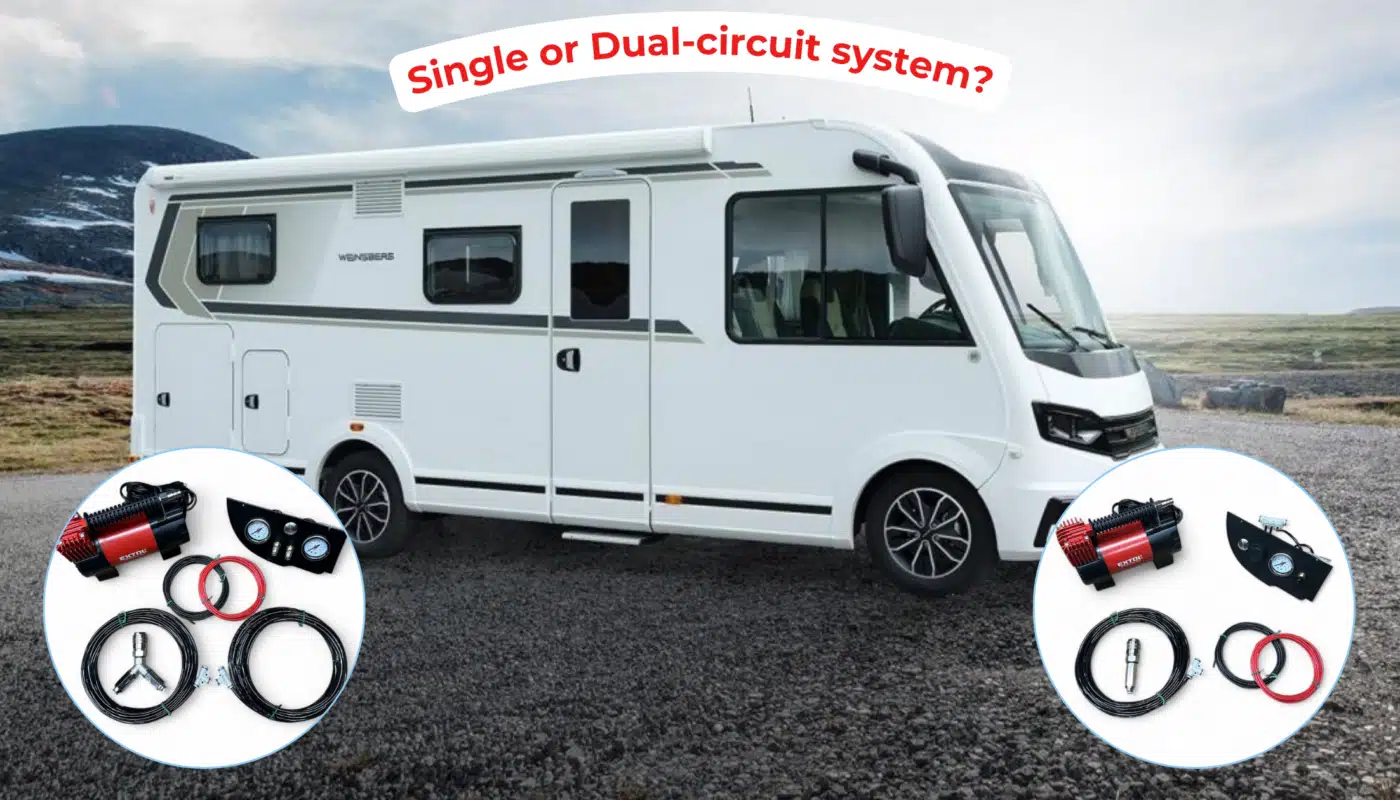
Single-Circuit vs. Double-Circuit Air Suspension Systems: What’s the Difference and Which One Is Right for You?
When it comes to air suspension systems, whether for comfort, load management, or off-road capability, one of the key decisions is whether to choose a single-circuit or a double-circuit system. This distinction refers to how the air springs are managed in the suspension and whether they are controlled individually or together. Understanding the difference is crucial in determining which setup best suits your needs.
Single-Circuit Air Suspension System
In a single-circuit air suspension system, all the air springs (left and right) are connected to the same air circuit. This means that when you adjust the air pressure in the system, all of the springs fill or empty at the same time. Essentially, the air system controls the entire suspension setup as one unit.
Advantages of a Single-Circuit System:
- Simplicity and Cost: Single-circuit systems are simpler in design, which often makes them more affordable. This can be an ideal solution if you are looking for a straightforward, budget-friendly option.
- Ease of Use: Since the air springs are all connected, adjusting the system is easier and quicker. You don’t need to worry about controlling the springs individually – everything is adjusted at once, which can be more convenient.
- Uniform Adjustments: If you don’t need to fine-tune the suspension between the left and right sides or front and rear of the vehicle, a single-circuit system will work well. It’s perfect for general use where equal load distribution and leveling are sufficient.
Disadvantages of a Single-Circuit System:
- Lack of Individual Control: One of the major drawbacks is the inability to control the left and right (or front and rear) air springs separately. This means that if one side of the vehicle is carrying more load than the other, it may not be possible to compensate by adjusting one side independently.
- Limited Flexibility: For vehicles that carry uneven loads or require precise adjustments, a single-circuit system may not provide the flexibility you need. The entire system must be adjusted as a whole.
Double-Circuit Air Suspension System
In a double-circuit air suspension system, the air springs are divided into two separate circuits, typically one for the front and one for the rear, or sometimes left and right. This allows you to independently control the air pressure in the different air springs, providing more precise adjustments and flexibility.
Advantages of a Double-Circuit System:
- Independent Control: One of the biggest advantages of a double-circuit system is the ability to control the left and right air springs separately. This is especially useful for vehicles with uneven load distribution or those that frequently carry varying weights.
- Improved Handling and Stability: By adjusting the air pressure individually on each side or axle, you can optimize handling and stability. This helps to ensure that the vehicle remains level, even when there is an uneven load or when towing a trailer.
- Customization: Double-circuit systems allow for greater customization. For example, if the front end of the vehicle is carrying more weight than the rear, you can increase the pressure in the front air springs without affecting the rear suspension. This results in more balanced and comfortable driving.
- Better for Towing and Heavy Loads: If you often tow a trailer or carry uneven loads, a double-circuit system can significantly improve ride quality and safety by keeping the vehicle level and ensuring the suspension is adjusted according to the load.
Disadvantages of a Double-Circuit System:
- Complexity and Cost: Double-circuit systems are more complex and typically more expensive. They require additional components, like separate air compressors or valves for each circuit, which increases the cost and installation complexity.
- Requires More Maintenance: With the added complexity, double-circuit systems may also require more maintenance and occasional troubleshooting, especially if any of the circuits become faulty.
- More Difficult to Use: Because you are controlling each circuit independently, it can be a bit more difficult to master, especially for drivers who aren’t familiar with adjusting air suspension systems. You’ll need to make sure both circuits are adjusted properly to avoid uneven suspension.
Which System Should You Choose?
The decision between a single-circuit and a double-circuit air suspension system depends largely on how you use your vehicle and your specific needs:
- Choose a Single-Circuit System if:
- You have a simpler vehicle setup or drive with uniform loads.
- You want a cost-effective and easy-to-install solution.
- You don’t need to make precise adjustments to each axle or side of the vehicle.
- Choose a Double-Circuit System if:
- You often carry uneven loads, tow trailers, or need precise control over each side of the vehicle.
- You need more flexibility and customizability for different driving conditions.
- You want better stability, handling, and leveling, especially for heavy-duty applications.
Conclusion
Both single-circuit and double-circuit air suspension systems have their advantages and disadvantages, and the choice depends on the type of driving you do and the level of control you need. A single-circuit system is ideal for simpler applications where you don’t need to make individual adjustments, while a double-circuit system offers greater control, better handling, and enhanced flexibility, especially for towing or carrying uneven loads.
You can access our auxiliary air spring kits at the link below:
https://air-suspension-systems.eu/product-category/air-suspension-kits/air-suspension-kits-airsuspension-kits/
